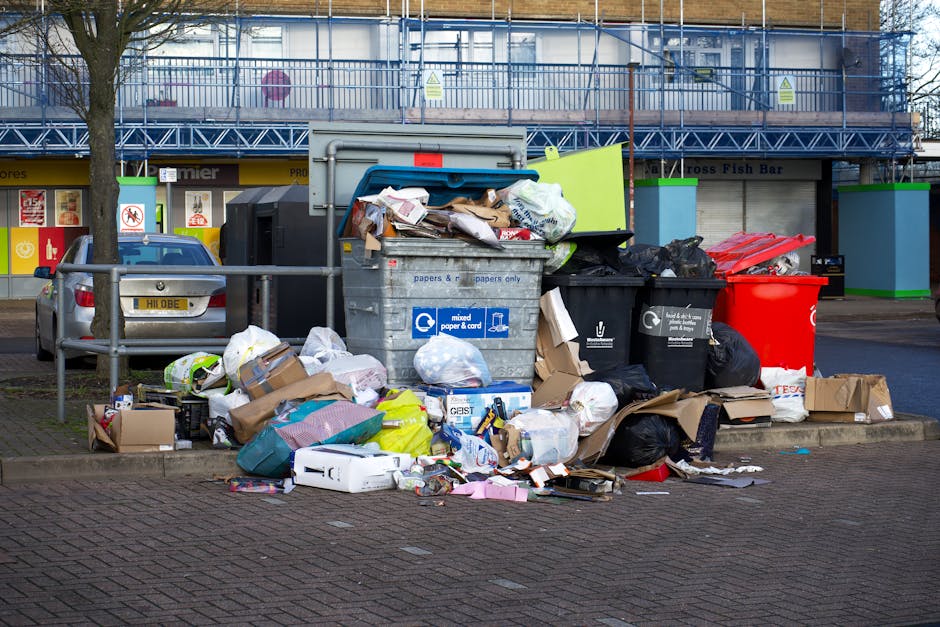
Avoid hidden rubbish clearance charges in Barbican
If you have ever had a rubbish clearance quote that looked fine at first, only to swell once the team arrived, you are not alone. Hidden rubbish clearance charges in Barbican can turn a simple clear-out into a frustrating, expensive mess. The good news? Most of these extra costs are avoidable once you know what to look for, what to ask, and how a proper quote should be presented.
Barbican properties often come with their own quirks too: tight access, lifts that are busy at the wrong moment, basement storage rooms, loading restrictions, or a flat full of awkward items that take longer than expected. That does not mean you should pay for surprises. This guide explains how to spot hidden fees, compare rubbish clearance quotes properly, and make a calmer, better-informed decision before anyone starts lifting a single sofa.
Table of Contents
- Why avoiding hidden rubbish clearance charges in Barbican matters
- How rubbish clearance pricing should work
- Key benefits and practical advantages
- Who this is for and when it makes sense
- Step-by-step guidance
- Expert tips for better results
- Common mistakes to avoid
- Tools, resources and recommendations
- Law, compliance, standards and best practice
- Options, methods, and comparison table
- Case study or real-world example
- Practical checklist
- Conclusion
- Frequently asked questions
Why avoiding hidden rubbish clearance charges in Barbican matters
Let's face it, nobody enjoys arguing over a bill after a clearance has already started. Hidden charges can be more than annoying; they can disrupt your budget, delay other work, and make a genuine declutter feel like a bad experience. In a place like Barbican, where residents and businesses often need tidy, timely removals with minimal fuss, clarity matters even more.
There are a few reasons this issue comes up so often. Some firms quote loosely over the phone and then add costs for access, labour time, disposal type, or "unexpected" extra volume. Others give a low headline price to win the job, then rely on the customer being too far along to walk away. That old trick still happens. Not always, but often enough to be worth guarding against.
Hidden rubbish clearance charges also make comparison shopping harder. If one quote is honest and another is a little misleading, the cheaper one may not actually be cheaper at all. And once the van is there, with your hallway half full of boxes and a busy weekday ticking on, it is a lot harder to say no.
A clearer pricing process gives you control. You know what is included, what is not, and what could change the cost. That alone can save time, stress, and a fair bit of money.
Practical takeaway: A trustworthy rubbish clearance quote should explain the job, the load size, access conditions, any special items, and whether labour, disposal, and transport are included. If it does not, ask again before you book.
How rubbish clearance pricing should work
Most rubbish clearance services price jobs by a mix of volume, weight, labour, access, and item type. In plain English, that means the cost should reflect how much waste there is, how hard it is to remove, and whether the items need special handling. That sounds reasonable, because it is.
A clean quote normally starts with a description of what needs removing. For example: two wardrobes, a broken mattress, mixed bagged rubbish, and a few boxes from a flat. From there, a company may estimate the load size or request photos. That is usually where the first signs of transparency show up. If they want clear photos and answer specific questions, that is a positive sign. If they just say "we'll see on the day," be cautious.
In Barbican, practical details matter more than many people expect. Is there lift access? Will the team need to carry items down several flights? Is parking straightforward, or will there be a wait? Does the building have timed access? These factors can affect labour time and vehicle logistics, but they should be explained before booking, not treated as a surprise later.
There is also a difference between a fixed quote and an estimate. A fixed quote is usually based on the information you provide and should stay stable if the job matches that description. An estimate may change if the actual load or access differs from what was described. Both can be legitimate, but you need to know which one you are being given. That little detail is easy to miss, and it matters a lot.
If you are unsure what can be taken or how certain items are priced, a useful place to start is the company's pricing and quotes information. You can also check the general scope of waste removal services to see whether your job fits standard clearance work or needs something more specific.
Key benefits and practical advantages
When pricing is clear from the start, the benefits are immediate and very real. You are not paying for guesswork, and you are not trying to decode a bill while the van is still outside. That is the ideal, anyway.
- Better budget control: You can plan the full cost before you commit.
- Less stress on the day: No awkward renegotiation while items are being loaded.
- Faster decisions: Transparent quotes make it easier to compare providers.
- Lower risk of disputes: Clear expectations reduce misunderstandings later.
- Cleaner service experience: The job feels organised, not improvised.
There is also a practical benefit people often overlook: transparency usually reflects process quality. A company that can price carefully is often a company that has thought through access, item handling, disposal routes, and customer communication. Not always, of course, but enough that it is worth paying attention to.
For homes, that can mean a smoother clear-out after a move, renovation, or inheritance situation. For businesses, it can prevent operational disruption. For example, an office clearance in Barbican should not turn into a half-day headache because a provider underestimated the amount of mixed waste or failed to ask about building access.
If your clear-out includes awkward or specialist items, the right service also matters. A mattress, sofa, fridge, or appliance may involve different handling from mixed general waste, and that should be reflected in the quote rather than disguised inside a vague lump sum. You can review the specialist options such as mattress and sofa disposal or fridge and appliance removal if those are part of your load.
Who this is for and when it makes sense
This topic matters to almost anyone arranging a rubbish clearance in Barbican, but some people need it more urgently than others. If you are managing a home move, clearing a rented flat, dealing with post-refurbishment debris, or emptying a business space, hidden charges can quickly eat into your budget.
It is especially relevant if:
- you are comparing several rubbish clearance quotes and want a fair like-for-like comparison;
- you are clearing bulky or mixed items and need to understand what affects cost;
- you live in a building with controlled access or shared spaces;
- you are arranging a clearance under time pressure, which, to be fair, is when people get caught out most often;
- you want a service that handles disposal responsibly instead of just hauling things away.
Businesses in particular should pay close attention. A cheap quote may look fine for a small one-off job, but when confidential items, electronics, or mixed office furniture are involved, the provider should be upfront about handling and disposal. If not, that is a warning sign.
For a broader business context, the guidance around business waste removal and office clearance can help you judge whether the provider seems set up for your kind of work. If the job is domestic, services like flat clearance, house clearance, or home clearance may be more suitable depending on the property and volume.
Step-by-step guidance
If you want to avoid surprise costs, the safest approach is methodical. Nothing fancy. Just a calm, sensible process.
- List everything that needs removing. Write down item types, quantity, and whether anything is unusually heavy, fragile, or awkward.
- Take clear photos. A few wide shots and a close-up of special items are usually enough.
- Explain access conditions. Mention stairs, lifts, parking restrictions, loading bays, timed entry, or long carries.
- Ask what is included. Labour, vehicle use, disposal, congestion, and VAT or fees should be made clear.
- Check for exclusions. Hazardous waste, electrical items, mattresses, or heavy builders' waste may need separate handling.
- Request the pricing format. Is it a fixed quote or an estimate? Get that distinction in writing if possible.
- Confirm the arrival process. Ask how the team will assess the load on arrival and what would trigger a price change.
- Read the terms carefully. Not thrilling, I know, but this is where many hidden charge disputes start.
If you are clearing a property in stages, break it into categories. For example: soft furnishings, general household rubbish, unwanted electronics, then special items. A good company can often price more accurately when the job is grouped logically rather than described as "a bit of everything."
For more complex clearances, especially where the pile includes renovation leftovers, you may want to compare the scope of builders waste clearance against standard rubbish removal. The right category matters because the wrong one can lead to a messy quote, or a refusal on the day. Nobody wants that conversation at 8:30 in the morning.
Expert tips for better results
Over time, the easiest way to avoid hidden charges is to make it hard for anyone to be vague with you. Friendly, yes. Vague, no.
1. Ask for an itemised explanation. Even a short one is useful. If the price changes based on load size, access, or special disposal, you want those assumptions laid out early.
2. Use photos, not just descriptions. "A few bits" means very little to a clearance team. A photo, however, tells a better story in two seconds.
3. Mention access honestly. If the lift is slow, if the stairs are narrow, or if the loading zone is a pain, say so. Hiding that detail rarely helps.
4. Ask about awkward items. Sofas, fridges, mattresses, and hazardous materials can change disposal requirements. Better to raise it now than argue later.
5. Keep all agreement points in one place. A confirmation email, message thread, or written note is useful if anything is disputed later.
6. Watch for too-good-to-be-true pricing. A very cheap quote can be real, but sometimes it is cheap because key elements are missing. There is a difference between efficient and incomplete.
A small but useful habit: once you receive a quote, ask yourself, "What would make this price go up?" If the answer is unclear, ask again. Simple as that.
For extra confidence around service standards, you may also want to look at information on insurance and safety and the company's health and safety policy. Good operators are usually willing to explain how they protect people, buildings, and belongings during clearance.
Common mistakes to avoid
The most common mistakes are surprisingly ordinary. No drama, just small oversights that end up costing money.
- Not describing the job fully: Incomplete information often leads to revised pricing later.
- Assuming all waste is treated the same: It is not. Mixed rubbish, appliances, and specialist items may be priced differently.
- Ignoring access details: A long carry or difficult lift can affect labour time.
- Skipping the terms and conditions: This is where some providers hide the rules that matter most.
- Focusing only on the headline price: The cheapest quote is not always the best value.
- Forgetting to confirm VAT or additional fees: Those small additions can alter the final number quite a bit.
- Leaving hazardous items unmentioned: That can lead to refusal, reclassification, or extra handling charges.
One particularly common issue in Barbican is underestimating the access challenge. A clear-out that sounds straightforward on paper can become awkward if the team has to negotiate building rules, tight corridors, or shared spaces. That is not the provider being difficult; it is the job being more involved than first thought. The key is that those complications should be discussed early.
If you are not sure whether an item counts as standard or specialist waste, the page on what can go in a skip can give you a helpful sense of how waste is commonly sorted, even if you are not using a skip. It is not a perfect match for every rubbish clearance job, but it is a practical reference point.
Tools, resources and recommendations
You do not need complex tools to avoid hidden charges. Honestly, a notebook and your phone camera will do more than enough. Still, a few resources and habits make the process smoother.
- Photo set: Take wide-angle shots of the whole area, then close-ups of unusual items.
- Simple inventory: Write down furniture, bags, boxes, appliances, and anything fragile or heavy.
- Access notes: Record lift use, stair count, parking arrangements, and any time restrictions.
- Quote comparison sheet: A basic table with columns for included labour, disposal, access assumptions, and exclusions.
- Terms review: Read the service terms before confirming, not after. Bit boring, but worthwhile.
It can also help to check related service pages so you understand how the provider frames different kinds of work. For example, a flat-based removal is often different from a garden or garage clearance, and a business job may involve different handling again. Relevant pages such as garage clearance, garden clearance, and furniture disposal can help you gauge how specific the service offering is.
If your clearance includes sensitive documents, confidential items, or office paperwork, confidential shredding may be a useful complementary service. That is one of those things people forget until the last minute, and then it suddenly becomes urgent. Funny how that happens.
Law, compliance, standards and best practice
While this article is not legal advice, it is sensible to think about compliance whenever waste is removed. In the UK, waste must be handled responsibly, and customers should be careful about who they hire. A legitimate operator should be able to explain how waste is transported, processed, and disposed of in a lawful and environmentally responsible way.
In practice, that means looking for clear communication about disposal routes, recycling, and handling of special waste streams. If a company is vague about where waste goes, that is not reassuring. The same goes for unclear billing. A transparent provider tends to be transparent in both areas.
Best practice also means proper insurance, staff safety, and fair terms. You are entitled to ask how the provider protects your property and what happens if access, damage, or scheduling problems arise. The pages on insurance and safety, health and safety, and complaints procedure are useful signals of whether the company has thought these things through.
If you are using a disposal service in a shared building, a bit of extra care is wise. Keep common areas protected, confirm timing in advance, and make sure nothing is left blocking exits or corridors. That is just good sense, and usually good manners too.
Recycling expectations matter as well. A company that works with recycling and sustainability in mind is generally easier to trust, especially if you want waste reduced responsibly rather than just moved out of sight. You can read more about recycling and sustainability if that is important to you, and it probably should be.
Options, methods, and comparison table
There is no single best way to handle every clearance. The right option depends on volume, access, urgency, and the type of waste. Here is a simple comparison to help you think it through.
| Method | Best for | Strengths | Watch-outs |
|---|---|---|---|
| Full-service rubbish clearance | Mixed household or business waste, bulky items, quick removals | Convenient, labour included, usually fastest | Quote must be clear on load size and access |
| Specialist item removal | Sofas, mattresses, fridges, appliances | Better handling for awkward items | May involve item-specific pricing |
| Property clearance | Flats, houses, lofts, homes, offices | Good for larger, staged clear-outs | Scope must be defined carefully |
| Skip-based disposal | Projects with predictable, loadable waste | Useful for ongoing renovation work | Access, permits, and what can go in the skip need checking |
For many Barbican jobs, full-service rubbish removal is the easiest route because access can be awkward and speed matters. But if you are clearing a longer-term project, a more structured approach may suit you better. There is no prize for choosing the most complicated method. Choose the one that fits the job.
Case study or real-world example
Here is a realistic example. A resident in Barbican needs to clear a one-bedroom flat after a move. The job includes a wardrobe, broken desk, mattress, several bags of mixed waste, and a few boxes from the storage cupboard. The building has lift access, but only during limited hours, and the loading area is not right outside the entrance.
At first glance, it sounds like a standard one-van job. But once access, carrying distance, and the mattress are all factored in, a vague quote can become unreliable very quickly. If the provider only asked for "roughly how much rubbish is there?" the customer may be left exposed to a higher on-the-day fee.
Instead, the safer approach would be:
- send photos of the rooms and the items;
- state that the job is from a flat with lift access;
- mention the mattress and bulky furniture upfront;
- ask whether the quote is fixed for the described load;
- confirm whether labour, disposal, and access assumptions are included.
The result is usually a much smoother experience. No drama, no awkward stand-off at the door, and no surprise "oh, by the way" fee at the end. That is the goal, really.
Practical checklist
Use this checklist before you book. It is simple, but it catches a lot.
- Have I listed every item that needs removing?
- Have I included photos of the load and access points?
- Have I mentioned stairs, lifts, parking, or loading restrictions?
- Do I know whether the quote is fixed or estimated?
- Have I asked what is included in the price?
- Have I checked for extra fees linked to special items?
- Have I reviewed the terms and conditions?
- Do I know what happens if the actual job differs from the description?
- Have I asked about recycling, disposal, and safety standards?
- Have I got the agreement in writing or in a message I can refer back to?
Quick summary: If the quote is clear, the access is honest, and the item list is specific, hidden charges become much less likely. That is the whole game.
Get a free quote today and see how much you can save.
Conclusion
Avoiding hidden rubbish clearance charges in Barbican is not about becoming suspicious of every provider. It is about asking sensible questions, giving accurate information, and choosing a company that values clarity as much as you do. Once you do that, the whole process becomes far less stressful.
Whether you are clearing a flat, an office, a garage, or a mix of bulky household items, the same principle applies: detailed quotes beat vague promises every time. And if a provider is open about access, disposal, and what is included, that is usually a strong sign you are dealing with professionals rather than opportunists.
Take your time, check the details, and trust the companies that make pricing easy to understand. That little bit of care upfront can save a surprising amount of hassle later, and a calmer clear-out is worth a lot on a busy Barbican day.
Frequently Asked Questions
What are hidden rubbish clearance charges?
They are extra costs that are not made obvious in the first quote, such as access fees, labour additions, special item charges, or disposal-related surcharges. The issue is usually not the fee itself, but the lack of clarity before booking.
How can I tell if a rubbish clearance quote is honest?
An honest quote explains what is included, what assumptions were made, and what could change the price. It should not rely on vague wording alone. If the provider asks for photos and gives clear answers, that is a good sign.
Should I always choose the cheapest quote?
Not necessarily. The cheapest headline price can be misleading if it excludes labour, disposal, or access-related work. Compare quotes on the full service offered, not just the starting number.
Do Barbican flats need special clearance planning?
Often, yes. Barbican properties can involve lift use, shared corridors, timed access, or tricky parking and loading arrangements. These details should be discussed early so the quote reflects the real job.
What details should I give before booking rubbish removal?
Provide a clear item list, photos, access information, floor level, lift availability, parking restrictions, and whether any items are heavy, fragile, or specialist. The more accurate the description, the less room there is for surprises.
Can a rubbish clearance company change the price on the day?
Sometimes, if the actual job differs materially from what was described. That is why it helps to know whether you were given a fixed quote or an estimate. If the job matches the description, the price should not suddenly jump without reason.
Are sofas, mattresses, and fridges priced differently?
They can be. Bulky items and appliances often need specific handling, and some may require specialist disposal. It is best to mention them upfront so they are included correctly in the quote.
What if I have both household and office waste?
Say so clearly. Mixed loads can affect pricing, especially where office items, confidential material, or electronic equipment are involved. A company offering business waste removal or office clearance may be better suited to that kind of job.
Do I need to read the terms and conditions?
Yes, even if it is not your favourite part of the process. The terms often explain access rules, cancellation points, pricing assumptions, and any restrictions that could affect the final cost.
Is recycling usually included in rubbish clearance?
Often it is part of the service, but the level of recycling effort can vary. If responsible disposal matters to you, ask how the company handles sorting and recycling before you confirm the booking.
What should I do if I think I have been overcharged?
Gather the written quote, any messages, photos, and notes from the booking. Then raise the issue calmly with the company and follow its complaints process if needed. Good documentation makes a big difference.
How do I prepare for a smoother clearance day?
Keep the items accessible, remove anything you are not throwing away, clear a route if possible, and make sure someone responsible is available to answer questions. A little prep goes a long way, honestly.
Where can I find more information before booking?
It can help to review the company's pages on pricing and quotes, recycling and sustainability, and the relevant clearance service pages for your items. That gives you a better feel for how the job is likely to be handled.